One Left Shoe and a Bag of Shopping: What Our Back Seats Teach Us About Booking Better
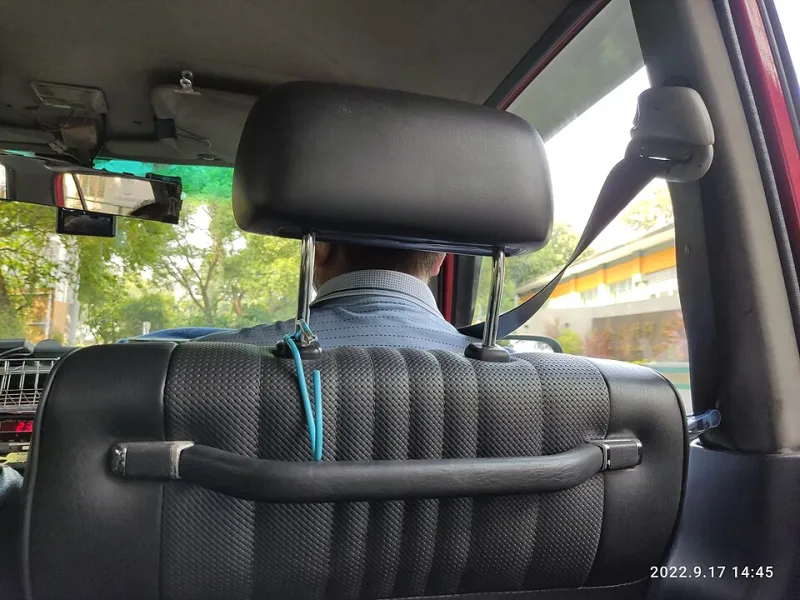
Photo: COEBZTAFA lanmi MWIC, CC BY-SA 4.0, via Wikimedia Commons
Every cab firm ends up with a drawer, a shelf or a plastic crate of other people's things. Ours has been filling up for twelve months, and the contents tell a surprisingly consistent story — not about forgetfulness, but about the way people book journeys when they are in a hurry.
So here is the inventory, the retrieval process, and a few habits worth pinching.
The back seat inventory
A year's haul, roughly in order of how often it turns up:
- Phones. Always phones. Usually wedged down the side of the seat, occasionally still glowing.
- Umbrellas. The most left-behind object in Britain, and the least missed until it rains.
- Beach kit. Wet towels, windbreaks, bodyboards, a bag of sand that was once a bag.
- Shopping. Carrier bags from the Holmbush shops that never made it to the kitchen table, including one memorable birthday cake.
- School things. PE kits, water bottles, one left shoe, and a blazer that somebody's mum was not happy about.
- Small valuables. Sunglasses, headphones, reading glasses, chargers, keys.
- Children's toys. The cuddly sort. Those calls are always urgent and always understandable.
- Oddities. A single flip flop. Half a bag of chips. A prescription bag. A takeaway menu somebody had clearly been studying hard.
What the list says about how we book
The pattern is not random. Almost everything left behind comes from a journey booked in a rush — the five-minute scramble after a train, the group booking where nobody takes ownership of the bags, the trip with three drop-offs where the last person out is already thinking about their front door.
The more stops in a booking, the higher the chance something stays in the car. Similarly, late-night journeys produce a spike, and so do journeys where the passenger has clearly just been handed a phone with a driver's number on it and is doing three things at once.
None of that is a criticism. It is just a pattern, and patterns can be worked with.
What actually happens when you ring
Policies differ between firms, but locally the process tends to look like this. The office takes your call, logs the date, approximate time, pickup and drop-off points, and the driver's name if you have it. The driver is asked to check the back of the car — usually at the next stop rather than instantly, because they may be mid-fare. If the item is there, it goes to the office and gets logged, with anything valuable kept separately.
Phones are answered where possible, though a locked handset is not much help to anybody. Items with names or addresses on them get a call if the firm can work out who to ring. Cards and wallets are usually held securely and handed back only to someone who can describe them and prove who they are.
Most firms hold items for a set period — commonly a few weeks — then dispose of, donate or otherwise pass on whatever is left. Anything with personal data or real value tends to be treated more carefully. Ask when you call; you will get a straight answer.
The retrieval steps that work
- Ring the firm you booked, not a general search result. Know the name of the company, because 'a white taxi' is not a lead.
- Have the details ready. Time of travel, pickup address, drop-off, how many of you, roughly what the driver looked like.
- Describe the item precisely. 'A black bag' is not going to help. 'A black rucksack with a red zip and a school name tag inside' will.
- Don't remote-wipe your phone straight away. If you have location tracking, tell the office where it is pinging — that is often the fastest route to a reunion.
- Agree the handover. Collect from the office if it is convenient, or ask about a paid drop-back. Small items can sometimes be posted.
- Be patient with the timing. A driver cannot always pull over and search the car the second your call comes in.
Five habits that stop the next phone call
- Do the pocket pat before the door opens. Phone, keys, wallet — out loud if you have to. It takes four seconds.
- Keep your bag on your lap. The footwell and the parcel shelf are where things go to be forgotten.
- Screenshot the booking. Firm name, time, pickup, reference. If something goes wrong later, that image is worth more than your memory of the evening.
- Nominate one person to own the group's belongings. In a four-person booking, everybody assumes somebody else has the beach bag.
- Count heads and shoes with children. The cuddly toy should be in a hand before the door handle is touched, not on the seat behind you.
A last word from the crate
There is something quietly reassuring about a lost property drawer: it means people got home, mostly intact, with a story to tell. But a good booking is a boring one — you arrive, you pay, you walk in with everything you left the house with.
If you do leave something behind, ring sooner rather than later, and ring the office rather than the driver's mobile. The drawer is not going anywhere, but the item in it might be.