Ramps, Tie-Downs and Tight Corners: Booking an Accessible Cab Around Adur
Ask three people along the coast what an "accessible taxi" is and you'll get three different answers. One will picture a converted estate with a ramp folded into the boot. One will picture a purpose-built van with a lift and a space where a seat would normally be. One will simply be thinking about the step up into a saloon, and whether their dad can manage it on a stiff morning.
That gap in understanding is where most awkward bookings begin. Rarely because drivers are unhelpful — most operators between Southwick and Worthing will bend over backwards — but because the booking was made in shorthand. "Wheelchair accessible, please" is a hope, not a specification. Turning it into a specification takes about four minutes on the phone.
Start with the passenger, not the vehicle
Before you think about vehicles, think about the journey as the person in the chair will experience it. Do they stay in the wheelchair for the whole trip, or transfer into a seat once aboard? Are they bringing a folding frame as a backup in case the venue is awkward? Is a companion travelling too, and do they need to sit alongside rather than in the front? Is there a hospital bag, a walking frame, a scooter?
The answers change what you should ask for. Someone who transfers can often use a standard estate with a big boot. Someone who stays in the chair needs a proper wheelchair-accessible vehicle — usually shortened to WAV — and the difference in price and availability is worth knowing before you dial.
Six questions worth asking on the phone
- Is it a purpose-built WAV or a converted car? Conversions are fine, but the internal space and ramp angle differ enormously.
- Rear ramp or side lift? A rear ramp means boarding from the road behind the vehicle rather than from the kerb, which matters on a busy stretch like the A259.
- How is the chair secured? You want a four-point strap system with a lap-and-diagonal belt, or a proper docking system, and a driver who has been trained to use it. Ask outright.
- How many seats are left once the chair is in? A WAV that carries one wheelchair user often still seats three or four others — but not always.
- Can you take a mobility scooter? Class 2 scooters are usually fine in a larger vehicle; class 3 road scooters are heavier and often can't be secured safely in a converted car. Say the make and weight if you know it.
- Does a companion travel in the quoted fare, or is that extra? Worth pinning down, particularly for hospital runs where you're often pricing two people and a bag.
If the person taking the booking hesitates on any of these, ask them to check with the driver and ring you back. A good operator would rather do that than guess.
Lead times that actually work on this coast
Same-day accessible transport is often possible locally, especially mid-morning. But the vehicles are a small slice of any fleet, and they get booked for the same reasons everyone else does: school runs, day centres, dialysis, airport departures at four in the morning.
As a rough rule of thumb: book 24 to 48 hours ahead for a hospital appointment, longer if it's an early slot at Worthing Hospital or Southlands, and longer again for anything involving an airport or a ferry. If the journey is regular — physio every Tuesday, a day centre run three mornings a week — ask for a standing booking rather than ringing each time. It holds the vehicle and saves you the weekly phone call.
The day before: confirm the metal, not the time
A confirmation that says "10:15, Tuesday" tells you nothing useful. Ask for the vehicle make and model, the registration, and the driver's first name by text or email the day before. Then ask the driver to ring or text roughly fifteen to twenty minutes out, so nobody is parked on a yellow line wondering where you've got to.
It's also worth confirming which side of the street you'll be on. Sounds fussy. Isn't, when the ramp has to come down.
Kerbside truths: places that look easier than they are
Shoreham-by-Sea station. The forecourt is tight, buses come through, and there's nowhere sensible to leave a van with a ramp down. Agree a specific spot on Station Road or a nearby side street instead of saying "the station".
Lancing station. The approach is narrow and commuter parking eats the kerb. A rear-ramp vehicle often has to stop further back than you'd expect.
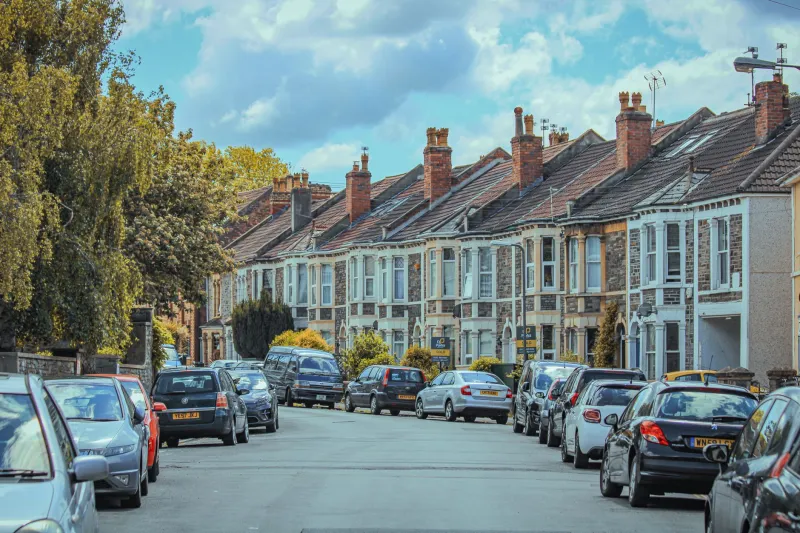
Southwick station. Quieter, but the surrounding streets are Victorian-narrow with parked cars both sides.
Worthing station. The rank itself is fine; the run in along Railway Approach is the problem at peak times, when a WAV can sit in traffic with the meter ticking.
Worthing Hospital. The main entrance is a scrum at clinic changeover. Lyndhurst Road and the surrounding streets are often the calmer drop-off, and if the passenger can manage a slightly longer push, it's usually faster.
GP surgeries and clinics. Lancing Health Centre and the Shoreham practices have small car parks that fill early. Tell the operator you need the door, not the car park.
One more: a dropped kerb isn't always where the sat-nav thinks it is. If your street has a driveway ramp, a camber, or a grass verge between pavement and road, say so at booking. Drivers will happily position for it — they just need to know.
If it isn't right on the day
If the ramp angle looks alarming, or the driver seems unsure of the straps, ask them to move the vehicle or repark on the flat. Nobody should be talked into a boarding that feels unsafe, and a decent operator will back you up. Report it afterwards, too — it's the only way fleets learn which kerbs to avoid.
The short version
Say whether the passenger stays in the chair. Ask what kind of vehicle and how the chair is secured. Book two days ahead for appointments, more for airports. Get the registration the day before and a call twenty minutes out. And name the exact spot you want collecting from, not the landmark nearest to it.
None of that is complicated. It just needs saying out loud.