Late, Lost or Called Off: What to Do When Your Adur Cab Doesn't Turn Up
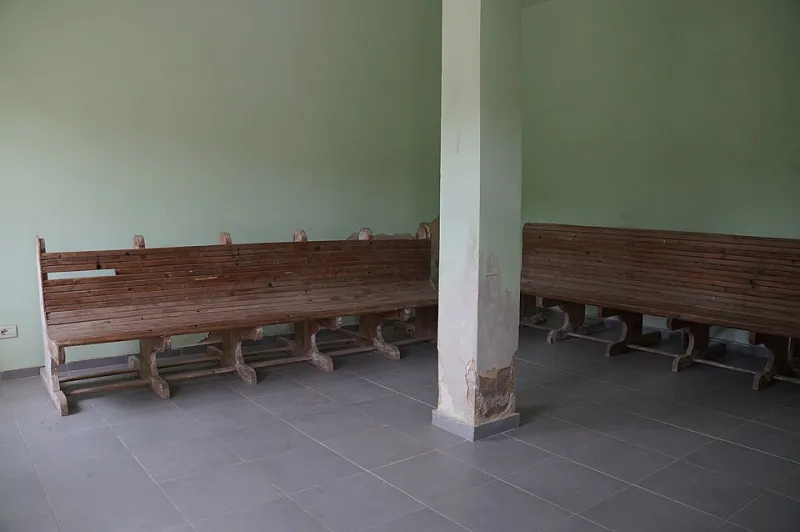
Photo: albinfo, CC0, via Wikimedia Commons
It is 7.20 on a Tuesday morning, you are outside Shoreham-by-Sea station with a coffee going cold, and the car you booked last night is nowhere to be seen. Nothing dramatic has happened. Nobody has crashed. But your train leaves in eighteen minutes and this has suddenly become the most important problem in your day.
Deep breath. Nine times out of ten, a late cab is a boring, fixable thing — a driver stuck behind the bin lorry on Ham Road, a booking logged for the wrong side of the station, or a phone number with one digit out. Here is the order to work through it in, so you are not ringing around in a panic.
Start with the boring checks (two minutes, not ten)
Open your confirmation and read it properly, not the way you read a takeaway menu.
- Which side of the station? Shoreham-by-Sea has the main forecourt, but passengers who came over the footbridge from the Brighton Road side often stand somewhere the driver cannot legally stop. Lancing has the station and it also has the Broadway, and they are not the same place. Worthing has two exits: the south side onto Railway Approach and the north side, and they are a good two minutes' walk apart.
- Is it 07:10 or 19:10? It happens weekly to somebody. Make sure it isn't you today.
- Check the date. A booking made on a Sunday evening for 'tomorrow' is a coin toss in some people's heads.
- Check the contact number. If it was typed in wrong, the driver may have been ringing a stranger for the last ten minutes.
- Look down the road, not just at the kerb. In Shoreham High Street and around Lancing Broadway, drivers often wait just around the corner where there are no double yellows. Walk twenty metres and have a look before you conclude anything.
What a realistic waiting buffer actually looks like
A good local operator aims to be a couple of minutes early, not a couple of minutes late. But Adur is not a blank sheet of tarmac. Build in slack for:
- The school run — roughly 8.15 to 9.00 and 14.45 to 15.30, when every side street in Lancing and Shoreham clogs at once.
- The A27 around Lancing Manor and Sompting, which can lose you ten minutes without warning.
- Level crossings on the coastway line, which are the great unpunctuality engine of this stretch of Sussex.
- The Adur Ferry Bridge lifting on a summer afternoon, which sends anything crossing the river the long way round.
- Rain, or a sunny Sunday, both of which turn the coast road into a car park.
For a train or a flight, ask for a car ten minutes before you actually need to leave. Then a ten-minute delay is annoying rather than catastrophic, and you have bought yourself some peace for the price of nothing.
Call or message? A simple rule
Ring if the trip is time-critical. A train, a hospital appointment, a flight, a wedding. Office phones are staffed and a human can move a car.
Message if it is not. A driver cannot read a text at the wheel and hands-free kit is not universal. A message that goes unread for eight minutes is not evidence of anything except that your driver was driving.
One more thing: if you have the office number and the driver's number, ring the office first. Dispatch can see the whole board. The driver can only see the traffic in front of them.
What you should reasonably expect from any operator
- A call before you have to call them, if the car is more than a few minutes late. Chasing should not be the passenger's job.
- A straight answer about where the car is, even if the answer is 'he is stuck at the crossing and it will be eight minutes'.
- A backup plan — the nearest available car, a realistic revised time, or permission to grab a different lift without being charged.
- No fee if no car turned up. That sounds obvious. It is worth saying out loud because it is not always what happens in practice.
No-show policies, in plain English
A 'no-show' cuts both ways, and it is worth knowing which one you are in.
Passenger no-show: the driver arrived, waited the grace period, tried to contact you, and left. Grace periods are commonly ten to fifteen minutes for a local run — longer for airport pickups, where waiting is part of the product. A fee may apply, and that is fair enough if the car was genuinely at your door.
Driver no-show: you waited, nobody came, nobody called. No fee, no argument, and if you prepaid, you should get it back.
If it ever comes to a dispute, the things that win it are boring: the confirmation email, the times you rang, screenshots of the messages. Note them at the time, not three days later from memory.
Cancellation timing
Free cancellation windows are measured in hours, not minutes — commonly one to two hours before pickup for local work, and longer for airport runs and long-distance trips. Inside that window a percentage or fixed fee may apply, which covers the driver who turned down other work for your slot.
But context matters. If you cancel because the car is already twenty-five minutes late and the journey no longer serves any purpose, say so clearly and most operators will waive it. Ask, politely, and explain the timeline. Refunds on prepaid card bookings typically land in three to five working days, so do not panic on day two.
When it goes properly wrong
Keep it factual. Note the booking reference, the pickup time, the time you first called, and who you spoke to. Complain in writing to the office rather than to a driver's personal mobile. If a licensed vehicle is involved, Adur & Worthing councils handle licensing and take complaints about operators seriously. A card chargeback exists as a last resort, but it should be a last resort — most of these things are sorted with one sensible phone call.
The sixty-second version
Check the confirmation. Look around the corner. Ring the office, not the driver, if time matters. Ask for the nearest car. Ask whether a different pickup point would help. Keep your reference. And if you are going to be late yourself, ring and say so — the grace period is much friendlier when the passenger has bothered to communicate.