The Boot Space Conversation: Booking a Cab for Dogs, Buggies and Beach Kit in Adur
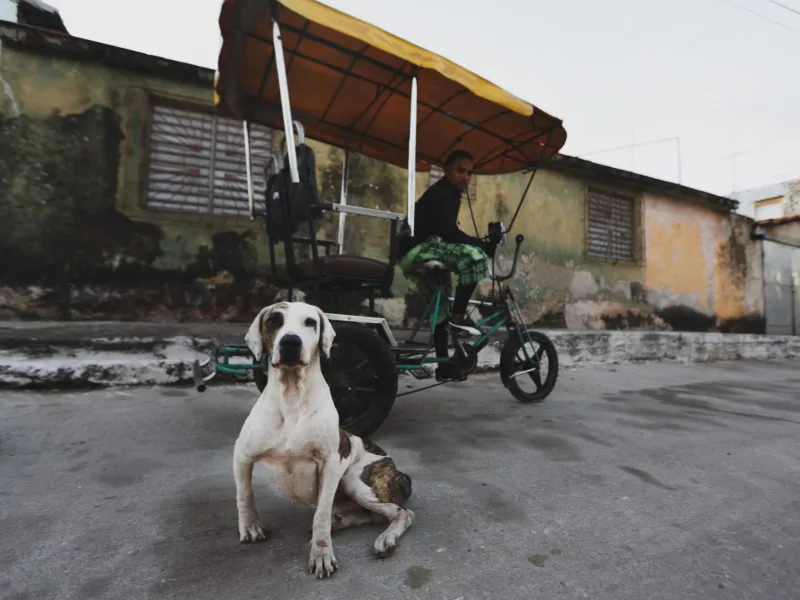
Picture the scene. It is a Sunday in late August, you are at the top of Lancing beach with a damp dog, a toddler asleep in a travel system, two bags of wet towels and a paddleboard you have already decided you will never use again. The car that pulls up is a tidy saloon. The driver looks at your cargo. You look at the driver. Nobody is at fault, but the journey is going to be awkward and somebody is going to be late for a roast.
The fix happens at the booking stage, not at the kerb. Here is how to have that conversation properly.
The one-line rule: say it when you book
Dispatch assigns a vehicle class before anyone knows your life story. A saloon cannot become an estate in four minutes, and a driver who arrives to find a folded double buggy and three suitcases is allowed to be mildly annoyed. So when you book, describe the load as bluntly as you would to a friend helping you move house.
- 'One medium dog, in a carrier, on my lap.'
- 'One Labrador, wet, needs the boot.'
- 'Folded stroller plus two cabin bags.'
- 'Double buggy, not folding small, plus a three-year-old.'
That sentence is worth more than any amount of apologising on the pavement.
Dogs: what's normal and what's fair
Assistance dogs are different. Under the Equality Act 2010, licensed drivers must carry assistance dogs and cannot charge extra for them. Mention it anyway when booking, purely so the right car turns up and nobody is surprised at the door.
Other dogs are at the operator's discretion, and most Adur drivers are relaxed about a well-behaved dog provided it is either in a carrier, on a blanket, or in the boot of an estate or MPV. A large dog in the back seat of a saloon is a negotiation, not a right.
Be honest about wet. A dog that has just come off Widewater or out of the Adur at low tide is not the same passenger as a dry spaniel on the way to the vet. Bring a towel. Say 'he's wet' at booking. Drivers appreciate the warning far more than they mind the damp.
Cleaning fees are a real thing, and they should be agreed, not sprung. If sand, mud or hair means the car needs a valet before the next fare, expect a charge — commonly in the region of thirty to sixty pounds depending on how bad it is. A decent operator will tell you at the time, not add it silently to your card.
Prams, pushchairs and the folding question
A pram cannot travel loose in the cabin. It either folds into the boot or you carry the carrycot on your lap, and the second option is only sensible for a short hop.
- Compact strollers fold to something the size of a large handbag and will go in almost anything.
- Travel systems with a carrycot are the bulky middle ground. Fine in an estate boot, tight in a saloon.
- Double and tandem buggies need an estate, an MPV or a small van. Book accordingly and do not hope for the best.
If the baby is asleep and you would rather not wake them, ask for a car with a big boot at booking and lift the whole carrycot in folded. It takes ten seconds and saves a meltdown.
On child seats: licensed taxis and private hire vehicles are exempt from some of the usual child seat rules, but do not build a plan around that. Ask when you book whether a seat can be provided, and if you have your own, bring it — most drivers are happy for you to fit it yourself.
Luggage, shopping and sports kit: rough numbers
Useful rule-of-thumb, assuming nobody is travelling on a lap:
| Vehicle | Realistic load |
|---|---|
| Saloon | Two medium cases plus two cabin bags |
| Estate or MPV | Four cases plus cabin bags, or a folded buggy and cases |
| Van or XL | Bikes, boards, flat-pack furniture, a big shop |
A few Adur-specific wrinkles. Golf bags take up a passenger-sized space, so two golfers with two bags need an estate or bigger. A stand-up paddleboard is a roof-bar or van job — a ten-foot-six board does not go in a boot, no matter how confident you feel. Bikes usually need a wheel off and a driver who has agreed in advance. And a 'big shop' from Lyons Farm or Durrington is easily four full carrier bags once you have been to the middle aisle.
Pickup points that make loading up easy
Where you stand matters as much as what you bring.
- Shoreham High Street is narrow, double-yellowed and full of buses. Load up on a side street or by the station approach instead.
- Shoreham Beach is reached by road via the A259 and Beach Road — the footbridge is for people, not for your buggy and three bags.
- Lancing station forecourt is tight at commuter o'clock; Lancing Broadway suits shopping runs, and Lancing Manor's car park gives you space to fold things without an audience.
- Worthing station has two sides. Railway Approach on the south is easier for cars and luggage than the north side at peak times.
- Montague Street is pedestrianised, so arrange to meet at South Street or by the Guildbourne Centre rather than asking a driver to perform a miracle.
- Southwick Square and Fishersgate are narrow, so a considerate park-up beats a dramatic one.
And check the calendar. Bin day narrows half the terraced streets in the district, and the school run at 15.00 turns a simple pickup into a puzzle.
Your two-minute checklist before you book
- Count the people, the cases and the cabin bags.
- Say whether the pram folds small, folds big, or does not fold at all.
- Say whether the dog is small and carried, or large and in the boot — and whether it is wet.
- Mention child seats and whether you are bringing your own.
- Flag anything long, heavy or oddly shaped: boards, bikes, golf clubs, flat-pack.
- Pick a pickup point with room to stop.
- Add ten minutes if you are travelling at school-run time or in holiday traffic.
Do that and the Sunday-afternoon scene sorts itself out. The right car turns up, the boot closes first time, the dog settles, the toddler stays asleep, and you get home before the roast goes cold.