The Footbridge Test: Giving Adur Cab Drivers Directions That Actually Work
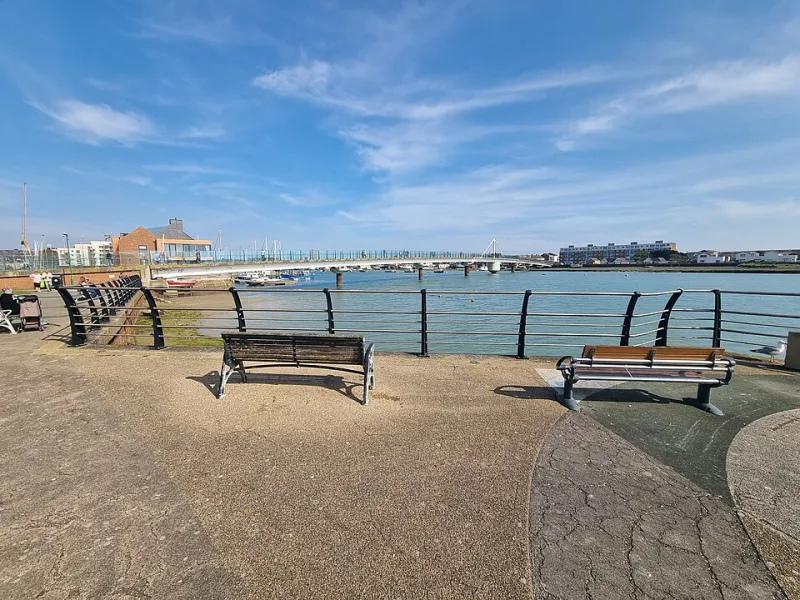
Photo: HJ Mitchell, CC BY 4.0, via Wikimedia Commons
If you have ever booked a cab and then watched it sail past the end of your road, you are in good company. Adur is full of useful shorthand. We all know what 'the footbridge' means, where 'the top of Lancing' starts and which church is the one behind the other one. The trouble is that this shorthand works beautifully between neighbours and less well between a passenger and a driver who has three other pickups, a one-way system and a level crossing to think about.
None of this is about being fussy. It is about getting you into the car sooner, especially when it is raining, when you are carrying shopping, or when you are already running late for a train. A good booking is not a long booking. It is just a clear one.
Why 'Near the Roundabout' Is a Booking Black Hole
'Near the roundabout' is the phrase that makes a driver's heart sink, not because drivers are unhelpful but because Adur has several roundabouts and they are not interchangeable. Holmbush, Shoreham Airport, the approaches to the A27, the little one by the retail park: they all have their own traffic patterns and their own safe stopping points. If you say 'near the roundabout', your driver may be picturing a completely different roundabout from the one in your head.
The fix is simple. Name the roundabout, then name the road you are on or the business you are beside. 'Holmbush roundabout, outside the gym on the town side' gives a driver something to aim at. 'Near the roundabout' gives them a guessing game with the clock running.
The Bridge, the Footbridge and the Other Bridge
Shoreham has a proper traffic bridge and a proper footbridge, and locals often shorten both to 'the bridge'. If you are standing at the Norfolk Bridge, say so. If you mean the Adur Ferry Bridge, say 'the footbridge' or 'the pedestrian bridge'. It sounds like a small distinction until your driver is waiting on the wrong side of the river.
The same goes for the station side of town. If you are near the level crossing, mention it. If you are on the High Street, say which end. A street name alone can cover a lot of ground in a town centre with parking restrictions and no-stopping zones.
Going Up: What 'Top of Lancing' Really Means
'Top of Lancing' is a lovely phrase and a terrible pickup instruction. For one person it means the northern edge of the village near the Downs. For another it means the top of a particular residential street. For a visitor, it could mean anywhere with a hill.
If you are in North Lancing, give the road or the junction rather than the general direction. If you are near Beach Green, say Beach Green. If you are at the leisure centre or the library, name it. Drivers know these places well, but they cannot see which 'top' you mean from a postcode alone.
Behind the Church, Past the Pub, Opposite the Green
Landmarks are brilliant when they are specific and maddening when they are not. 'Behind the church' could mean a rear entrance on a different street, a car park, or a footpath that no car can reach. 'Past the pub' depends entirely on which direction you are coming from.
A good rule is to pair the landmark with a side of the road or a nearby junction. 'Opposite the green, on the north side, just after the junction with the lane' is the sort of instruction a driver can follow at normal speed. If the landmark has a name on it, use the name. If it is a big site with several entrances, say which entrance you are at. Hospitals, retail parks, colleges and leisure centres are notorious for having one postcode and half a dozen places to stop.
Sat-Navs Are Confident, Not Correct
Sat-navs are useful, but they are not local. They will happily send a driver to the back gate of a private lane, the service road behind a shop, or a barrier that has been closed for years. New estates and recent road changes can confuse them too. A postcode is a point on a map, not a door.
If you know your postcode sends people to the wrong entrance, say so in the booking notes. If there is a barrier code, a gravel track, a no-through-road or a turning circle that is tighter than it looks, mention it. If you are on a fast road with nowhere safe to stop, suggest a nearby side street or car park. Drivers would much rather meet you somewhere sensible than stop somewhere awkward.
How to Give Directions That Land First Time
You do not need an essay. You need a handful of details, in the right order.
- Start with the postcode and the house number or name. If the number is not visible from the road, say where it is.
- Add one landmark, with a side of the road or a distance. 'Opposite the Co-op, on the left coming from the bridge' is perfect.
- Say which way you are facing or which junction you are near. This helps more than you would think.
- Name the entrance if you are at a big site. 'Main reception, not the delivery yard' is a useful sentence.
- Flag access details. Barrier codes, private lanes, locked gates and parking restrictions all matter.
- If your road is busy or double-parked, suggest a safer pickup point. A two-minute walk can save ten minutes of circling.
- Use the notes field when you book. A driver may not remember a phone call, but notes travel with the job.
- If you are at a station, venue or school, say which exit or gate. 'Outside the main doors' is clear. 'By the station' is not.
The Two-Second Habit That Saves Ten Minutes
Before you confirm a booking, read your pickup instruction back to yourself and ask one question: would a stranger who has never been to this street find me from that? If the answer is no, add one more detail. It might be the side of the road, the name of the shop, the colour of the gate or the fact that the sat-nav takes you to the wrong end of the lane.
We would always rather ask one extra question at the booking stage than have you standing in the rain wondering where your cab has gone. Local shorthand is part of what makes Adur feel like Adur. Paired with a postcode and a proper landmark, it also makes for a much better cab journey.