Ten Adur Journeys That Make Sat-Navs Weep (and How to Book Them Properly)
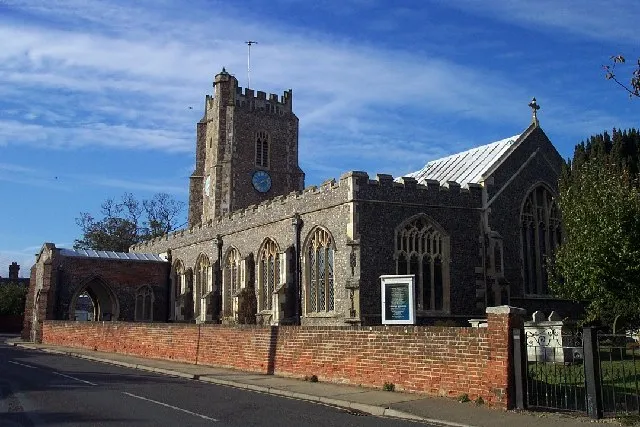
Photo: Geoff Pick, CC BY-SA 2.0, via Wikimedia Commons
Every town has its local shorthand. In Adur and around the Sussex coast, it usually involves a landmark that no sat-nav understands, a road that looks like a shortcut but is not, or a postcode boundary that has been quietly confusing visitors since the invention of the A-Z. This is the Adur Knowledge Test: ten journeys that a proper local driver gets right, and a few that a cheerful but overconfident app does not.
Score yourself. One point for each journey where you could give clear directions without checking your phone. No prizes, just the warm feeling of being the person in the group who knows where to stand.
How the test works
Each entry has the local trick, why it matters when you are booking a pickup or drop-off, and what to tell your driver. The idea is not to make driving harder than it needs to be. It is to save you from the classic coastal taxi dance: driver circles the block, passenger waves from a doorway, nobody is quite where they said they would be.
1. Shoreham Airport (Brighton City Airport), not the station
The trick: Shoreham Airport is not Shoreham-by-Sea railway station, and it is not a random industrial estate. It is Brighton City Airport, with a terminal, flying schools and a very different rhythm from the station forecourt. Pickups work best at the main terminal entrance or the agreed visitor parking area, not on the airport perimeter road.
Why it matters: People say 'the airport' and assume everyone knows which bit. A driver who goes to the station instead of the terminal adds 10 minutes and a phone call.
What to tell your driver: 'Brighton City Airport terminal, not Shoreham station.' If you are being dropped off for a flying lesson or a private flight, say which operator or building.
2. Adur Ferry Bridge is for feet, not tyres
The trick: The Adur Ferry Bridge links Shoreham town with Shoreham Beach, but it is a pedestrian and cycle bridge. Cars do not cross it. Taxis use the Norfolk Bridge and approach the beach from the correct side.
Why it matters: A sat-nav may happily draw a line across the river and assume you can follow it. You cannot, unless you are on foot and feeling energetic.
What to tell your driver: 'Shoreham Beach side, via Norfolk Bridge.' Add the road name or a nearby landmark if you are near the beach huts, the café or the residential streets.
3. Lancing College is a hill, not a postcode
The trick: Lancing College sits up on the hill and the approach is not a simple 'turn into the main gate and stop'. Event days, chapel services and school pickups create their own traffic patterns. The main gate, the visitor car park and the chapel are not the same drop-off point.
Why it matters: If you are going to a wedding, carol service or open day, being dropped at the wrong gate can mean a long walk in the wrong shoes.
What to tell your driver: 'Lancing College main gate via Coombes Road' or name the specific event and ask for the visitor car park.
4. Southwick Tunnel closures change the whole journey
The trick: The A27 Southwick Tunnel is a brilliant piece of road on a normal day. When it is closed for maintenance or an incident, traffic spills onto the A270 and the coast road, and a short trip can gain 15 to 30 minutes without warning.
Why it matters: If you are heading to Brighton, the airport or a fixed appointment, the tunnel is the difference between 'we are fine' and 'we are not fine'.
What to tell your driver: 'Check the A27 Southwick Tunnel before you set off.' If you know it is closed, ask for the A270 route and allow extra time.
5. The Lancing and Sompting boundary is a sat-nav trap
The trick: Lancing and Sompting sit cheek by jowl, with postcodes and boundaries that do not always match the bit of road you are standing on. A BN15 postcode can point one way; a Sompting address can send the driver to the wrong side of the A27.
Why it matters: This is the classic 'we are five minutes away' that turns into ten minutes of u-turns.
What to tell your driver: Give the nearest landmark as well as the postcode. 'Sompting village hall', 'Lancing station', 'the corner of Busticle Lane' or 'the A27 junction' is worth more than a postcode alone.
6. Shoreham High Street has a pedestrian point of no return
The trick: Shoreham town centre is not a racetrack. Parts of the High Street and East Street are pedestrianised or restricted, and the one-way system does not always match what the map suggests. The sensible drop-off is near the church or a recognised loading point, not halfway down a pedestrian stretch.
Why it matters: A driver who tries to follow a pin into a pedestrian zone will either stop somewhere awkward or spend the next five minutes reversing.
What to tell your driver: 'Shoreham town centre, drop near St Mary's Church' or name the shop or café you are aiming for.
7. Southwick Square is better than a narrow station street
The trick: Southwick station is handy, but Southwick Street is narrow and parked-up. For pickups, Southwick Square or a nearby side street often works better than trying to stop right outside the station.
Why it matters: A clean pickup needs a safe place to pull in. Blocking a bus stop or a narrow lane is not a local trick; it is a local annoyance.
What to tell your driver: 'Southwick Square' or 'station approach, but happy to walk to a side street.' Be specific about which side of the station you are on.
8. Worthing seafront is not always a through road
The trick: Worthing's seafront is lovely and, on event days, frequently not the place for a quick drop-off. Races, fairs, classic car events and summer crowds can close sections of Marine Parade or make access painfully slow.
Why it matters: If you are going to a seafront restaurant or event, the difference between the front and a side street can be 20 minutes of crawling.
What to tell your driver: Name the venue and ask for the nearest accessible side street. 'Marine Parade, but drop on the nearest open road' is a useful instruction.
9. Brighton station has a rank and a pre-booked pickup
The trick: Brighton station is busy enough without adding confusion. The taxi rank is for rank taxis. Pre-booked private hire pickups often work better on Queens Road or a nearby agreed point rather than the station frontage.
Why it matters: If you are arriving on a replacement bus or a late train, you do not want to be wandering between the rank and the wrong corner of the station.
What to tell your driver: 'Pre-booked pickup at Brighton station, Queens Road side' or ask them to confirm the exact meeting point before you travel.
10. The A27 Lancing slip roads are not all the same
The trick: The A27 around Lancing has slip roads, roundabouts and local access points that look interchangeable on a map but are not. The Lancing Manor roundabout, the flyover and the village approaches serve different sides of town.
Why it matters: A driver who takes the wrong exit can end up on the wrong side of the dual carriageway, adding a loop and a sigh.
What to tell your driver: Name the roundabout or landmark, not just 'Lancing'. 'Lancing Manor roundabout' or 'the A27 Lancing slip road' gives them something to aim for.
Your score
Eight to ten: you are a genuine Adur knowledge keeper. Six or seven: you have done your time on the coast road. Four or five: you have been let down by a postcode. Three or fewer: welcome to the club; this is exactly why you tell your driver the landmark as well as the address.
The serious point behind the quiz is simple. Local taxi journeys work best when the booking includes a bit of local context. A postcode is a start. A landmark, a station entrance, a bridge name or the right side of the A27 is what turns a pickup into a smooth one. Adur Cab Co covers Shoreham, Southwick, Lancing, Sompting and the surrounding coast, and a properly briefed driver will always get closer than a sat-nav having a small existential crisis.